
BESS & microgrids · 6 min
BESS sizing starts with load data, not a container size.
A technically credible storage proposal begins with the operating objective, interval demand, tariff, outage profile, site constraints and interconnection conditions.
 METRO POWER FIELD GUIDE
Battery capacity and power rating are outputs of an engineering and commercial problem definition. Choosing equipment before defining the use case can create an expensive system that is oversized, undersized or unable to deliver the expected value.
Separate power from energy
Power, expressed in kW or MW, governs how much the system can deliver at a moment. Energy, expressed in kWh or MWh, governs how long it can sustain that delivery. Both must be matched to the use case.
Model the whole system
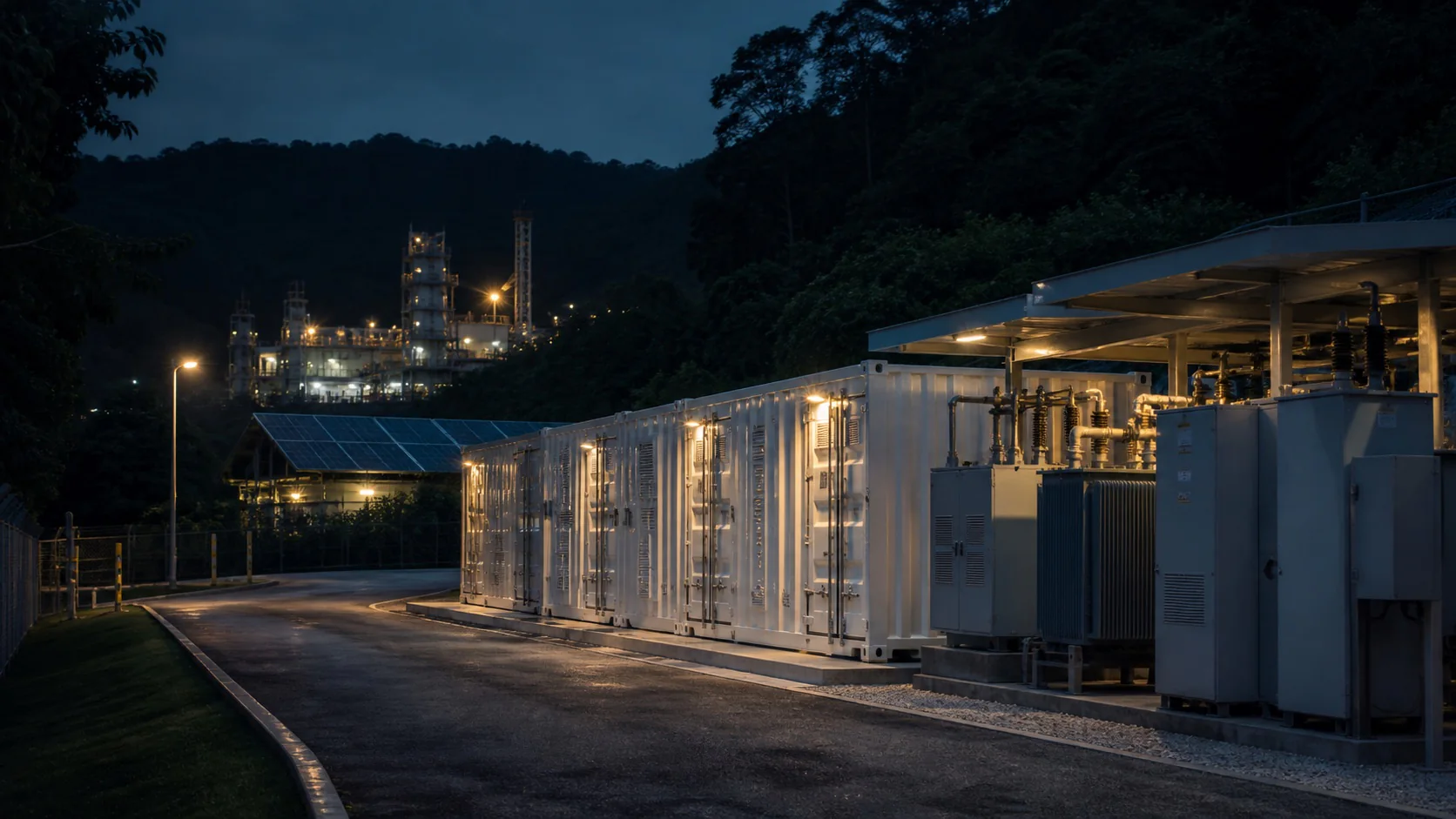
The battery is only one layer. A deployable solution also considers BMS, PCS, EMS or microgrid controls, transformers, switchgear, protection, fire and life-safety measures, civil works, ventilation or thermal management, communications and interconnection.
Define value before equipment
Peak shaving, load shifting, renewable integration and resilience create different dispatch patterns and acceptance tests. The financial case should state tariff assumptions, degradation, efficiency, operating limits, maintenance, financing and replacement expectations.
This guide is educational and does not establish project compliance, performance, pricing or approval. Confirm the controlling TOR, site data, selected equipment and applicable requirements before procurement or installation.